Buying a used commercial treadmill in 2026 requires more than checking its belt and touchscreen. Fitness facilities are demanding higher equipment uptime, while repair costs and replacement-part availability remain serious concerns. The Health & Fitness Association’s 2024 Global Fitness Industry Report recorded continued growth in memberships and facility numbers, increasing pressure on gyms to provide reliable cardio equipment. Meanwhile, the 2024 SFIA Topline Participation Report shows sustained consumer interest in fitness activities, including treadmill-based training.
That creates a practical question: What to look for when buying a used commercial treadmill? Start with the machine’s service history, model year, mileage, belt condition, deck wear, incline calibration, and motor noise. A polished console can hide a tired drive system. Listen closely. Grinding, hesitation, or uneven acceleration may signal expensive repairs. Fred Waters, a recognized treadmill equipment reviewer, states, “The motor is the heart of the treadmill.” That simple point deserves attention, although motor condition alone does not prove overall value.
Inspect the frame beneath the side rails. Check whether the belt drifts, slips, or leaves dark dust near the deck. Request diagnostic logs and confirm replacement parts remain available from the manufacturer. Commercial treadmills often survive heavy use, but “commercial grade” is not a guarantee. I have seen buyers focus on price and overlook installation, electrical requirements, and transport damage. That mistake can erase the initial savings. A careful buyer should compare the seller’s claims with technician records, a live running test, and an independent inspection before committing.
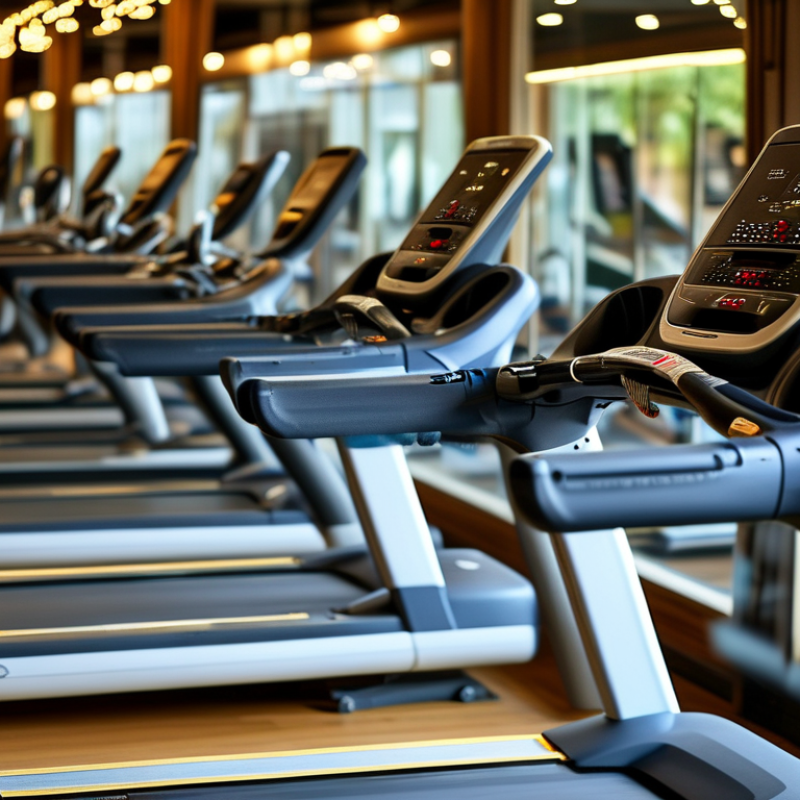
Commercial-Grade Benchmarks: 3.0+ CHP, 60×22-Inch Deck, 400-Lb Capacity
Used Commercial Treadmill Buying Tips for 2026
Commercial-grade benchmarks matter when buying a used treadmill. Look for at least 3.0 CHP, not only peak horsepower. Continuous power supports repeated sessions and heavier runners. A 60×22-inch deck gives most users safer, more natural stride space. Smaller decks may feel restrictive during faster walking or running. A 400-pound capacity also provides a useful durability margin. Do not treat it as a target load.
Tip:
Test the treadmill for ten minutes. Listen for clicking, belt slippage, motor strain, or uneven speed changes. Walk, jog, and adjust the incline several times. The frame should remain stable, even when your foot lands near the side rails. Check the belt edges for fraying and inspect the deck for dry, glossy wear. A recently replaced belt sounds helpful, but ask when the rollers and deck were serviced.
I once trusted a clean console too quickly. That was a mistake. Cosmetic repairs can hide neglected mechanical parts.
Request service records, operating hours, and the original capacity rating. Verify that emergency-stop controls, handrails, incline functions, and speed buttons respond correctly. Measure the deck yourself, because advertised dimensions can be rounded. Leave room behind the machine for safe mounting and maintenance. A professional inspection is worthwhile when replacement parts are costly or difficult to source.
Evaluate Age and Usage Against a 10–15-Year Commercial Service-Life Range
When buying a used commercial treadmill, treat age as only one part of the story. Industry maintenance guidance commonly places commercial service life around 10–15 years, but usage can change that sharply. A five-year-old treadmill running eight hours daily may be more worn than a nine-year-old unit used lightly. The 2024 Health & Fitness Association Consumer Report recorded 72.9 million U.S. fitness-facility users in 2023. That level of traffic helps explain why commercial machines experience constant belt, motor, and deck stress.
Tip:
Ask for service records, not promises. Check the manufacture date, operating hours, belt replacements, deck condition, and motor noise. Walk on the treadmill at different speeds. A slipping belt, uneven acceleration, or burnt smell deserves caution. Inspect the rollers and incline mechanism closely. Small defects can become expensive repairs.
A treadmill within its 10–15-year range can still be a sensible purchase if maintenance was consistent. However, age-related electronics failures may be difficult to predict. The 2023 IHRSA Global Report also shows continued worldwide demand for fitness facilities, reinforcing the importance of commercial-grade durability under repeated use. Still, reports describe markets, not individual machines. I would discount any unit without verifiable records, even if it looks clean. A fresh belt can hide worn rollers or a tired motor. Consider a professional inspection before payment. That modest cost may reveal problems a short demonstration misses.
Inspect Safety Features Under ANSI/ASTM F2276 Guidelines
2026 Top Tips for Buying Used Commercial Treadmills
Inspect every used commercial treadmill against the current ANSI/ASTM F2276 requirements. Treat the standard as a safety reference, not automatic proof of compliance. Ask for the model’s service history and original safety documentation. Missing records deserve careful attention.
Test the emergency stop before examining speed settings. The belt should stop promptly without jerking the user forward. Check whether the safety key attaches firmly and disconnects reliably. Hold both handrails while walking slowly. They should feel rigid, not loose or cracked. Inspect belt edges, deck seams, rollers, and side guards for exposed gaps. Look closely around moving parts. These areas can hide pinch hazards.
Run the incline through its full range. Listen for grinding, clicking, or uneven motor sounds. Test the display, speed controls, warning labels, and power cord. The frame should remain stable during acceleration and deceleration. Check grounding and electrical components through a qualified technician when possible. I have learned that a polished console can distract buyers from worn mechanical parts. My checklist is useful, but not perfect. If the treadmill hesitates, overheats, or shows unexplained error codes, pause the purchase. Request a documented repair estimate before negotiating. Also confirm that the current safety requirements and local installation rules apply to the intended facility.
Calculate Total Ownership Cost: Purchase, Transport, Repairs, and Warranty
2026 Top Tips for Buying Used Commercial Treadmills
Calculate the total ownership cost before accepting a low purchase price. A used treadmill listed at $2,000 may need another $1,500 before serving members reliably. Add inspection, transport, installation, electrical work, repairs, parts, and warranty coverage.
Ask for service records, operating hours, error-code history, and a clear video of the belt running. During inspection, I check belt tracking, deck wear, motor noise, incline movement, handrail stability, and emergency-stop function. A warm motor can hide problems. Test it after extended use.
Transport is often underestimated. Measure doorways, elevators, loading areas, and turning spaces. A heavy unit may require professional movers and special lifting equipment. Request a written warranty, including labor, parts, exclusions, and response times. Some warranties cover the motor but exclude the controller or worn belt. Read every condition.
Keep a repair reserve for the first year. Commercial equipment faces repeated impact, sweat, dust, and long operating hours. A basic spreadsheet helps compare two machines honestly. Enter the purchase price, delivery quote, expected repairs, power needs, and resale estimate. My own estimates have been wrong when older parts became unavailable. Leave room for that mistake.
2026 Top Tips for Buying Used Commercial Treadmills? - Calculate Total Ownership Cost: Purchase, Transport, Repairs, and Warranty
| Used Treadmill Category |
Typical Specification |
Purchase Price
(USD) |
Transport &
Installation |
Initial Inspection
& Setup |
Estimated Repairs
Years 1–5 |
Warranty or
Service Reserve |
Five-Year
Ownership Cost |
Estimated Resale
Value in Year 5 |
Net Five-Year Cost |
Cost per
Operating Hour |
| Entry Commercial Unit |
2.5–3.0 HP motor; 20" × 55"–60" running deck; 0–12 mph |
$1,800 |
$350 |
$200 |
$950 |
$450 |
$3,750 |
$500 |
$3,250 |
$1.08 |
| Mid-Range Fitness Facility Unit |
3.0–4.0 HP motor; 20"–22" × 60" running deck; 0–12 mph |
$3,500 |
$500 |
$300 |
$1,400 |
$750 |
$6,450 |
$1,000 |
$5,450 |
$1.21 |
| Heavy-Duty Gym Unit |
4.0–5.0 HP motor; 22" × 60"–63" running deck; 0–15 mph |
$6,200 |
$750 |
$400 |
$2,200 |
$1,100 |
$10,650 |
$1,800 |
$8,850 |
$1.48 |
Calculation assumptions: All figures are practical planning estimates in U.S. dollars for a five-year ownership period. Five-Year Ownership Cost equals purchase price + transport and installation + initial inspection and setup + estimated repairs + warranty or service reserve. Net Five-Year Cost subtracts estimated resale value. Cost per Operating Hour assumes approximately 3,000 hours for entry units, 4,500 hours for mid-range units, and 6,000 hours for heavy-duty units.
| Pre-Purchase Check |
What to Verify |
Potential Cost Impact |
Recommended Action |
| Running belt and deck |
Check for fraying, slipping, uneven wear, excessive noise, and a dry or damaged deck surface. |
A belt and deck replacement can commonly add $400–$1,200. |
Operate the unit at walking and running speeds before purchase. |
| Motor and drive system |
Listen for grinding or surging and confirm smooth acceleration under user load. |
Major motor or drive-board work may add $700–$2,000. |
Request service records and a written repair history. |
| Electrical and console functions |
Test speed controls, incline, emergency stop, display, heart-rate sensors, and error codes. |
Console or control repairs may add $250–$1,000. |
Confirm voltage, plug type, and facility electrical capacity. |
| Transport and access |
Measure doors, elevators, ramps, turning spaces, and the final installation area. |
Stairs, rigging, or special handling can add $150–$800. |
Obtain a delivered-and-installed quote rather than a curbside freight quote. |
| Warranty terms |
Review coverage for parts, labor, travel, motor, deck, belt, and commercial usage. |
A low-cost warranty may exclude labor or high-wear components. |
Compare the warranty limit with expected repair costs and downtime. |
Conclusion
What to look for when buying a used commercial treadmill? Start by checking whether the machine meets commercial-grade benchmarks, including at least 3.0 CHP, a 60-by-22-inch running deck, and a user capacity of around 400 pounds. Consider its age, maintenance history, and frequency of use against the typical 10–15-year commercial service-life range. A well-maintained older treadmill may be a better choice than a newer model with heavy wear or poor upkeep.
Before purchasing, inspect the frame, belt, motor, rollers, electronics, and safety systems in line with applicable ANSI/ASTM F2276 guidance. Test the treadmill through its full operating range, from 0.5 to 12 MPH and 0–15% incline, while confirming smooth transitions and a reliable emergency-stop response. Finally, calculate total ownership cost by including the purchase price, transportation, installation, possible repairs, replacement parts, and any available warranty coverage.

 Naturist Fitness