Choosing a low-impact cardio machine for an older adult should begin with comfort, stability, and realistic daily use. The question, “What is the best cardio machine for seniors with low impact?” has no universal answer. A machine that suits one person may feel unsafe or uncomfortable for another. Knee arthritis, balance concerns, grip strength, and previous injuries all matter. Small details matter too, such as a wide step, a clear display, and handles that do not force the shoulders upward.
The World Health Organization recommends that adults aged 65 and older complete 150 to 300 minutes of moderate aerobic activity weekly, when appropriate. The U.S. Centers for Disease Control and Prevention also recommends aerobic, muscle-strengthening, and balance activities for older adults. These recommendations support regular movement, not one specific device. Dr. Edward R. Laskowski, a Mayo Clinic sports medicine specialist, has explained, “Low-impact exercise can help improve fitness while placing less stress on the joints.” That principle makes recumbent bikes, elliptical trainers, rowing machines, and cushioned treadmills worth comparing carefully.
Comfort comes first. Safety matters more. A machine should allow steady breathing, controlled movement, and easy stopping. It should not create sharp knee pain or unusual dizziness. The best choice may be the simplest one: a recumbent bike near a sturdy chair, used for ten gentle minutes after breakfast. That may sound less impressive than a high-tech trainer. It may also be more sustainable. Still, personal judgment is imperfect, and professional medical advice remains important when symptoms, falls, or chronic conditions are present.
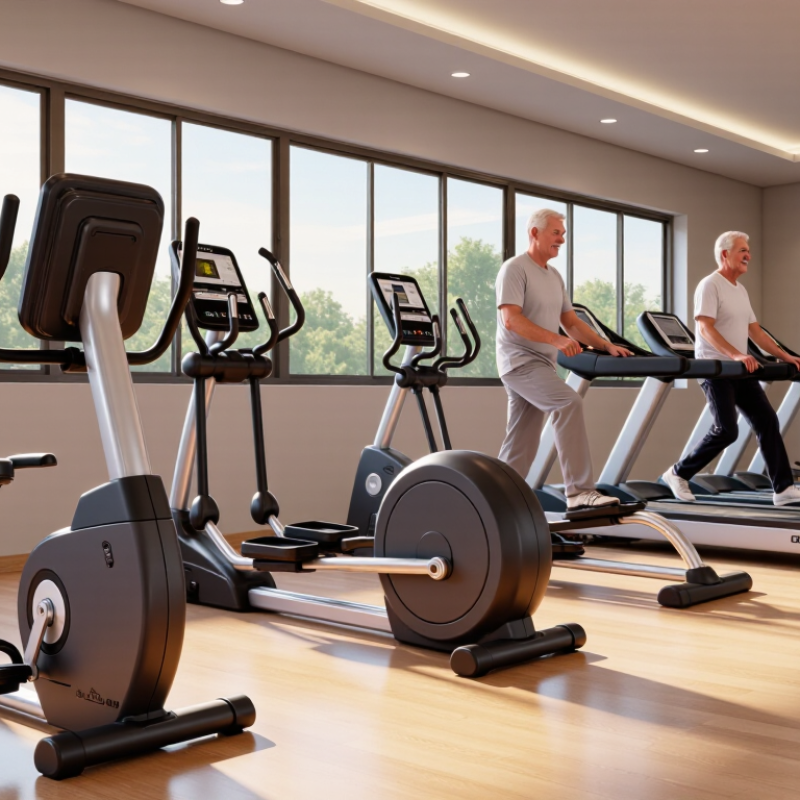
Low-impact cardio means raising your heart rate while limiting pounding on the knees, hips, and spine. The CDC recommends at least 150 minutes of moderate aerobic activity weekly for older adults. That can mean five 30-minute sessions, or shorter blocks spread across the week. The CDC also recommends muscle strengthening and balance activities. A machine should support these goals, not create new pain.
The CDC’s National Health Statistics Reports show that many adults still miss recommended activity levels. Equipment alone will not solve that gap. Consistency usually matters more than advanced features. Try ten minutes after breakfast, then repeat later. A conversation test can help: moderate effort should allow speaking, but not effortless singing. Stop for chest pressure, unusual breathlessness, dizziness, or sharp joint pain. Personal experience matters here; a machine that looks ideal may feel awkward after five minutes. A clinician or qualified exercise professional can review medical conditions, medications, and safe intensity before regular use.
Choosing cardio equipment for an older adult starts with joint needs, not appearance. A careful fit can reduce pain, improve confidence, and support regular movement.
In supervised exercise sessions, older adults often tolerate a recumbent bike better when their knees feel stiff. That observation is useful, but not universal. Ask a qualified clinician about persistent pain, balance concerns, or recent surgery. A treadmill suits seniors who walk comfortably and need familiar, weight-bearing exercise. Choose a wide deck, stable handrails, and simple speed controls. Start flat. An incline can increase ankle, knee, and hip demand. Stop if pain changes your walking pattern.
A recumbent bike provides back support and reduces balance demands. Set the seat so your knee stays slightly bent at the furthest pedal point. An upright bike requires more trunk control and may irritate a sensitive hip or lower back. An elliptical reduces foot impact, yet it still requires balance and a smooth stride. Hold the fixed handles if needed, and test only a few minutes first. Compare step-up height, resistance levels, emergency stops, and screen readability. Not always. A machine may feel comfortable during exercise but cause swelling later, so the next-day response deserves attention.
Match the machine to joint needs: compare treadmills, bikes, and ellipticals.
The scores show relative exercise demands on a 1–5 scale, where 5 indicates a greater demand or concern. Treadmills provide the most weight-bearing activity and may create more impact concerns, while stationary bikes offer the least weight-bearing option. Ellipticals provide weight-bearing exercise with less impact than walking or running because the feet remain on the pedals. Individual comfort, balance, range of motion, and medical advice should also guide the final choice.
A safe machine should support steady movement without sharp joint stress. A recumbent bike offers back support and stable foot placement. An elliptical can reduce impact, but balance matters. A treadmill should have side rails, a wide deck, and an easy emergency stop. Try each machine slowly. Comfort is useful evidence.
Intensity deserves closer attention. The American Heart Association recommends moderate exercise at 50–70% of estimated maximum heart rate. A common estimate uses 220 minus age. For a 70-year-old, that equals about 75–105 beats per minute. This is only a starting point. Heart medications, illness, and fitness level can change the picture. The talk test helps: speaking in short sentences should remain possible. Too breathless? Reduce resistance immediately.
Use a machine with clear speed, resistance, and heart-rate displays. Check the readings against manual pulse counting when practical. The Centers for Disease Control and Prevention recommends at least 150 minutes of moderate activity weekly for most adults, including older adults. Begin with ten-minute sessions if needed. Add time gradually. Stop for chest pressure, faintness, unusual weakness, or severe breathlessness. Seek medical guidance before training after a long inactive period or with a diagnosed heart condition.
I would not treat a displayed number as medical truth. Sometimes the safest setting feels almost too easy.
When seniors test a low-impact cardio machine, access should come before speed, screens, or resistance levels. A stable frame reduces hesitation during entry and exit. Look for wide feet, minimal rocking, and a firm base on the floor. Step-through frames matter because lifting one leg over a high bar can challenge balance. Keep it simple. A clear path lets the user approach, turn, and sit without twisting.
Handles should be easy to reach before movement begins. Fixed side handles can support standing transfers, while moving handles may help some users exercise their arms. They are not interchangeable. Check grip thickness, padding, and height with the actual user. On seated machines, the seat should feel firm, adjust smoothly, and provide back support. A recumbent design may suit someone with reduced balance, but the pedal distance still needs careful checking. Knees should not lock or strain at full extension.
I have found that a machine can look safe yet feel awkward after five minutes. That small detail matters. Ask the user to enter, sit, adjust, pedal slowly, and stop independently. Watch for wobbling, breath holding, or reaching too far. A healthcare professional or qualified exercise specialist can review limitations, especially after surgery or a fall. My own preference is to test with ordinary shoes and loose clothing, not showroom conditions. A perfect fit is unlikely, and forcing one can create new problems.
Choosing a low-impact cardio machine for seniors requires more than checking price or appearance. Controls must feel simple, visible, and safe during real use. Sit or stand beside the machine and test every button. Can the user adjust resistance without leaning forward? Are the numbers large enough to read under ordinary room lighting?
Tip 1: Look for adjustable resistance. Light settings should feel smooth, not suddenly heavy. A gradual increase helps users manage effort and protect sensitive joints. An emergency stop should be easy to reach, clearly marked, and simple to activate. Practice using it before exercise begins. That small step matters.
Tip 2: Check the stride or movement range. Some machines allow shorter strides, which may suit users with limited hip or knee mobility. The pedals should remain stable, with enough space for ordinary walking shoes. Try several settings slowly. Fit is personal, and an online measurement guide may not match real comfort.
Tip 3: Test the controls while wearing reading glasses, if normally needed. A confusing display can create stress and poor decisions. During practical testing, I would also observe whether the user can start, pause, and stop independently. I would not assume the safest setting is obvious. A healthcare professional can help confirm whether the machine suits an individual’s balance, strength, and medical needs.
Start with joint comfort, balance, and walking ability. A treadmill suits comfortable walkers needing weight-bearing exercise. A recumbent bike may feel better with stiff knees. An elliptical reduces foot impact but still requires balance. There is no perfect machine.
Choose a treadmill when walking feels steady and comfortable. Look for a wide deck, stable handrails, and simple speed controls. Start flat. An incline increases ankle, knee, and hip demands. Stop if pain changes your walking pattern.
Its back support reduces balance demands during exercise. Set the seat so the knee remains slightly bent at the furthest pedal point. Check the pedal distance carefully. A comfortable seat can still fit poorly.
No. An upright bike requires more trunk control. It may irritate a sensitive hip or lower back. Test slowly with ordinary shoes. Stop if discomfort grows.
An elliptical limits foot impact but still needs a smooth stride. Hold the fixed handles if balance feels uncertain. Test only a few minutes first. Awkward movement is a warning.
Look for a stable frame, wide feet, and minimal rocking. Step-through frames reduce the need to lift one leg over a high bar. Keep a clear path for approaching, turning, and sitting. Simple access matters.
Handles should be reachable before movement begins. Check their thickness, padding, and height with the actual user. On seated machines, choose a firm seat with smooth adjustment. Moving handles and fixed handles serve different purposes.
Ask the user to enter, sit, adjust, pedal slowly, and stop independently. Watch for wobbling, breath holding, or excessive reaching. Test with ordinary shoes and loose clothing. Showroom comfort can mislead.
Check the body during exercise and again the next day. Swelling or increased pain may appear later. The machine may feel fine initially. Persistent pain, balance problems, recent surgery, or a fall require professional guidance. Fitness decisions are sometimes imperfect.
Choosing a low-impact cardio machine can help seniors improve heart health while reducing stress on the knees, hips, and back. What is the best cardio machine for seniors with low impact? The answer depends on individual mobility, balance, and joint needs. Treadmills can support walking at a controlled pace, stationary bikes offer seated exercise, and elliptical machines provide smooth, low-impact movement. The best choice is one that feels comfortable, stable, and easy to use.
Seniors should aim to build toward 150 minutes of moderate activity each week, following medical guidance when needed. Moderate intensity may generally fall within 50–70% of maximum heart rate, but users should begin slowly and monitor how they feel. Look for wide handles, step-through frames, comfortable seating, adjustable resistance and stride length, clear controls, and an emergency stop feature. A proper fit and secure setup can make workouts safer, more comfortable, and easier to maintain consistently.

Naturist Fitness